Day: April 8, 2025

  • Tanzania: Bishops launch a special national fund to support the country’s major Seminaries.

    Tanzania: Bishops launch a special national fund to support the country’s major Seminaries.

    As the number of vocations to the priesthood increases in Tanzania, seminaries need more resources to train students. The Bishops’ Conference has responded by setting up a special national fund.

    Sarah Pelaji – Dar es Salaam.

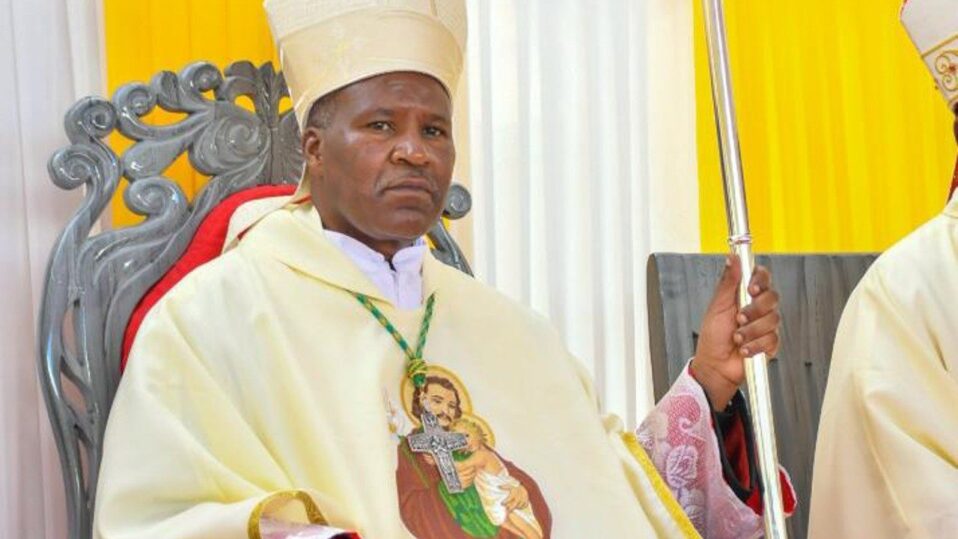
    This week, the Vice Chairperson of the Tanzania Episcopal Conference (TEC) and Bishop of the Diocese of Geita Flavian Kassala led the country’s faithful in launching the special seminarian fund.

    Iringa Diocese celebrates 125 years of Evangelization

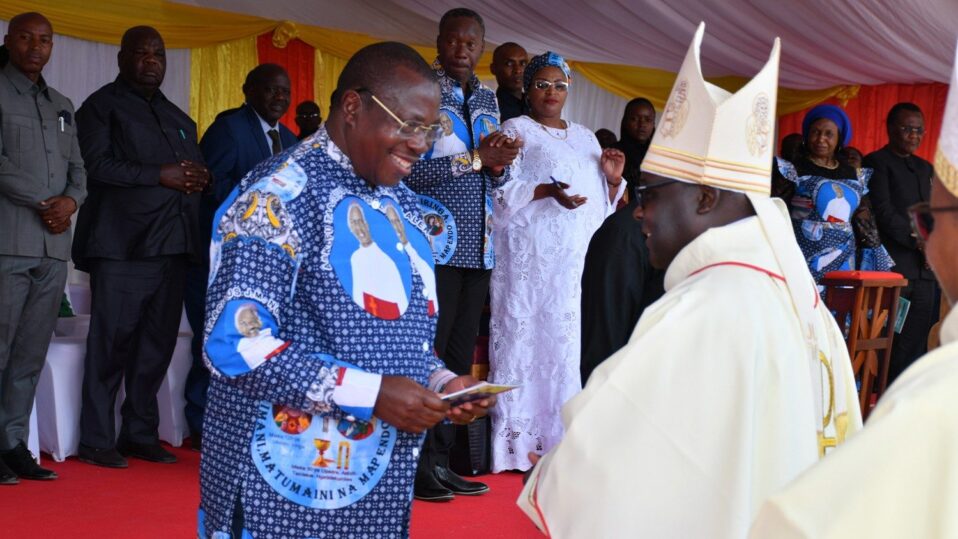
    The launch occurred in Tanzania’s Diocese of Iringa during the 125-year Jubilee Celebrations of Evangelization. Bishop Tarcisius Ngalalekumtwa of Iringa Diocese also celebrated his golden jubilee of priesthood at the same ceremony.

    In launching the special seminarians fund, Bishop Kassala was assisted by the National Board of Major Seminaries Chairperson, Bishop Joseph Mlola of the Diocese of Kigoma. 

    Bishop Kassala explained that the Bishops thank God for the increase in priestly vocations in the Church of Tanzania and would like the faithful to participate in training seminarians through prayers and concretely by nurturing and supporting seminaries.

    The harvest is plentiful, but the labourers are few

    “Being led by the Holy Scriptures, ‘The harvest is plentiful, but the workers are few, so ask the Lord of the harvest to send workers into his harvest’ (Lk. 10:2). Bishops need to have reliable internal resources to be able to meet the operating costs of the entire system of training tomorrow’s workers in the Lord’s vineyard,” explained Bishop Kassala. 

    He continued, “We, your Bishops, have decided to start a special national fund to support our major seminaries, the Catholic Major Seminaries Sustainability Fund’ without affecting our other existing systems supporting the formation at the diocesan levels. Therefore, I officially introduce to you this fund and the guidelines prepared and approved by all the Bishops to achieve the goal which will benefit the Church of Tanzania and the world at large,” he said.

    Tanzania: Bishops launch a national seminaries fund in Iringa.

    Tanzania: Bishops launch a national seminaries fund in Iringa.

    Bishop Kassala invited every baptised person and persons of goodwill to support the Church’s fundraising efforts through donations. He emphasised that the time had come for the Church of Tanzania to be self-sustaining. 

    As times change and funds from traditional sources dwindle, seminarians’ training can no longer depend on grants from Rome or writing projects to international Catholic partners, said the Bishop of Geita.

    The special seminarian fund is projected to generate TZs. 2.8 billion over the next three years (2023-2025).
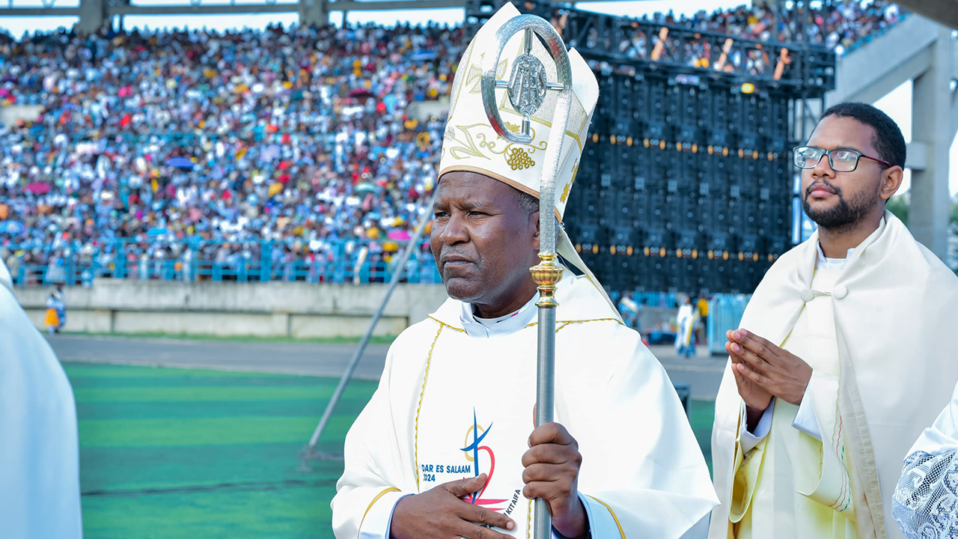
  • Tanzanian Bishops urge government to stop forcible Maasai relocations from Ngorongoro

    Tanzanian Bishops urge government to stop forcible Maasai relocations from Ngorongoro

    The Government of Tanzania has been advised to treat the Maasai community of Ngorongoro in the Manyara region as bonafide citizens who have dignity and are deserving of all fundamental human and democratic rights. These include the right to vote in the upcoming Local Government Elections of November 2024, and the General Elections, scheduled for next year

    Sarah Pelaji  – Dar es Salaam

    President of the Tanzania Episcopal Conference (TEC), Bishop Wolfgang Pisa, OF Cap, made the call this week, when he spoke at the Silver jubilee celebrations of priesthood for the Bishop of Mbulu Catholic Diocese, Anthony Lagwen.

    Forced relocation from ancestral habitat

    The Ngorongoro Conservation Area in northern Tanzania is a World Heritage Site managed by the Tanzanian Government. For centuries, the Maasai people have lived in the area alongside wild animals.

    In 2022, the Government of Tanzania launched a programme to encourage the ‘voluntary relocation’ of the Maasai from the conservation area to Msomera, a town located about 400 kilometres away from their traditional habitat.

    Many Masai tribesmen and observers have criticised the ‘voluntary relocation’ plan as far from being voluntary.

    Those who refused to move from the Ngorongoro Conservation Area have experienced inhuman treatment perpetrated by the country’s security forces. On 18 August 2024, the Maasai community in Ngorongoro organised a major peaceful protest along the Ngorongoro – Serengeti highway, demanding that the Tanzanian Government recognise and uphold their fundamental rights.

    Denied the right to register as voters

    The protest emerged after years of grievances related to the violation of their land rights, restricted access to social services, and physical harassment. The Maasai community has also faced increasing pressures, including denial of voter registration and protracted permit processes when they want to access their ancestral lands.

    Last week, the community’s frustration reached a boiling point as they set up roadblocks on a major highway, saying that, for far too long, their voices have been silenced and their rights trampled upon. They are now calling for meaningful dialogue with Tanzanian authorities to address their grievances and are urging the public to support their fight for justice.

    Bishops stand with the Maasai

    TEC President Bishop Wolfgang Pisa did not mince words when he urged the Government of Tanzania to respect the basis of good governance, transparency, truth, peace, and justice.

    He reminded the government that the country’s assets are owned by the people themselves, and the government is simply managing them on behalf of the people. The Maasai community should be respected, listened to, and not pressured into positions that disrupt their way of life. He criticised the government for denying the Maasai essential services, including their democratic duty to vote. Such measures by the government, the Bishop President said, are unacceptable for a country that holds dear the principles and tenets of good governance.

    Not true that people are relocating voluntarily

    Bishop Pisa also cautioned the country’s defence forces and security wings not to beat-up the Maasai who are fellow citizens, at the government’s behest. Instead, said the prelate, they should realise and remember that their primary purpose is to protect citizens at all times. Human beings, he said, are not donkeys to be treated anyhow. They deserve to be treated with respect and dignity, he emphasised.

    The TEC President reiterated the importance of a listening government anchored on justice and responsibility. He called on the Government of Tanzania to dialogue with the elders and representatives of the Maasai in the Ngorongoro Conservation Area.

    “There is no truth that the people are moving voluntarily, but they are being forced out and they are raising their voices about the denial of their rights… good governance is a legitimate way to be responsible and good governance comes from the people themselves… The Government should sit at the same table with the people of Ngorongoro; don’t force them to move,” Bishop Pisa said to much applause from the congregation present.

  • Tanzania’s National Eucharistic Congress draws thousands

    Tanzania’s National Eucharistic Congress draws thousands

    The fifth National Eucharistic Congress in Tanzania concluded with Bishop Wolfgang Pisa, urging the faithful to allow themselves to be touched and changed by the Holy Eucharist. The Tanzanian Bishops also took the opportunity to pronounce themselves on the spate of killings and abductions that have recently rocked the usually peaceful nation.

    Angella Rwezaula – Vatican City.

    At the closing Mass of the National Eucharistic Congress held at the Uhuru National Stadium, the Capuchin Franciscan Bishop Wolfgang Pisa, who is President of the Tanzania Episcopal Conference  (TEC) and Bishop of the Catholic Diocese of Lindi, said Christians should be known for love, care and forgiveness.

    Procession with the Eucharist

    The Eucharistic Congress in Tanzania took place from 12 September to Sunday, 15 September. Thousands of the Catholic faithful from all over Tanzania thronged the capital, Dar es Salaam, for the four days event,

    Earlier on Saturday, 14 September, there was a huge Eucharistic procession from the Dar es Salaam University School of Education campus at Kurasini to the Msimbazi Centre.

    Bishop Pisa further explained that the National Eucharistic Congress was designed to coincide with the International Eucharistic Congress 2024, which also concluded in Quito, Ecuador, South America, on Sunday, under the same theme: “brotherhood to heal the world.”

    Part of the crowd at the stadium

    Part of the crowd at the stadium

    The Eucharist is a Sacrament of fraternity.

    Bishop Pasi echoed Pope Francis’s message that the Eucharist teaches us fraternity.

    “This is a Sacrament of love, so we should not discriminate against each other because of ideology, race or for any other reason. We all have one God. My brothers and sisters, let’s approach this Sacrament without sin, let’s ask God to change us through this Sacrament so that we will be whole and new,” Bishop Pisa said.

    He emphasised that Christian witness should propel the faithful to a life of compassion, love and care for one another.

    “If you receive Jesus in the Eucharist and remain as you were, then there is something wrong in your life. This Sacrament makes us new,” emphasised the TEC President.

    National Eucharistic Congress closing Mass

    National Eucharistic Congress closing Mass

    Pope Francis’ goodwill message

    The Apostolic Nuncio to Tanzania, Archbishop Angelo Accattino, conveyed Pope Francis’ greetings to the Catholic faithful of Tanzania gathered in a National Eucharistic Congress. The Nuncio commended religious freedom prevailing in Tanzania, as demonstrated by the atmosphere at the Congress.

    Tanzania’s Deputy Prime Minister and Minister of Energy, Dr Doto Mashaka Biteko, greeted the Christian faithful attending the Congress and encouraged Tanzanians as a whole to embrace tolerance, mutual respect and love for one another. He also said differences in opinion among citizens should not divide them.

    The Tanzania Episcopal Conference seized the occasion of the Congress to strongly condemn the recent wave of killings and abductions in the country.

    Part of the choir

    Part of the choir

    Stop the killings and abductions

    TEC Vice President and Bishop of Mpanda Diocese, Eusebius Alfred Nzigilwa, read out, in KiSwahili, the Bishops’ Statement regarding the recent abductions and killings in Tanzania.

    The killing of Ali Mohamed Kibao, a senior member of the main opposition Chadema party, two weeks ago, shocked the country. Kibao was found dead after two armed men forced him off a bus heading from Dar-es-Salaam to the city of Tanga. His body was later found with marks of severe beatings and had been doused with acid.

    “Tanzania has always been known as an Island of peace”, and because of this, the Bishops “strongly condemned the incidents of abductions and killings that are going on in the country and want the relevant state institutions to live up to their responsibilities and restore the honour of Tanzania as an Island of peace,” Bishop Nzigilwa said.

  • Religious superiors meet in Tanzania to renew safeguarding efforts

    Religious superiors meet in Tanzania to renew safeguarding efforts

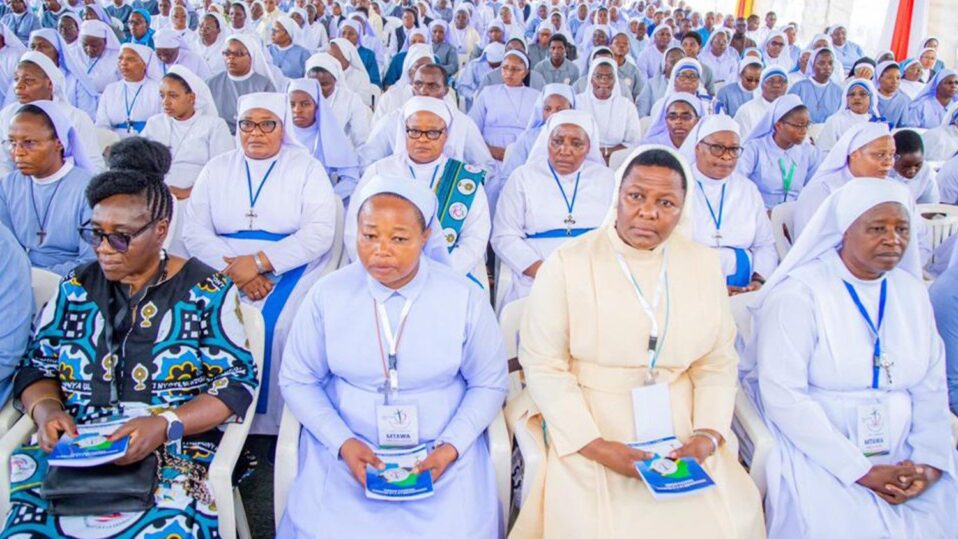
    Over 90 major superiors of religious congregations meet in Dar es Salaam, Tanzania, to share best practices they can implement in protecting vulnerable adults and children, and explore ways to uphold ethical standards and create safe environments within their religious communities.

    By Sr. Jecinter Antoinette Okoth, FSSA

    Safeguarding of children and vulnerable adults has been a critical issue in the Church due to growing awareness of abuse, misconduct, and violations of human dignity, since the Church is expected to be a place of safety, spiritual guidance, and moral leadership.

    At a four-day conference in Tanzania that brought together 92 major superiors from 84 different congregations, the religious women under their umbrella body, the Tanzania Catholic Association of Sisters (TCAS), have met under the theme “Creating awareness on safeguarding of children and vulnerable adults: The Catholic Church perspective.”

    According to Sr. Jacinta Ondeng, the project leader for the safeguarding initiative project with Mission Aachen in collaboration with Tangaza University in Kenya, this training is to help enhance the ability of superiors to establish safe environments within religious institutions, “by implementing clear policies, safe recruitment processes in religious institutions, and effective reporting mechanisms.”

    Additionally, the Kenyan nun said that safeguarding practices are not only to be “understood but to be fully integrated into the daily operations and ethos of religious institutions so as to foster a culture of accountability, compassion, and respect, where all members are empowered to identify and address potential risks.”

    The conference held on February 24-27 in Dar es Salaam delved on various topics, including safeguarding as a ministry in the Church, the signs of abuse, safeguarding for women religious, legal frameworks, working with victims of abuse, Church laws, and consequenses of abuse, among others.

    Religious are beacon of hope

    Through the commitment of consecrated persons to service, prayer, and justice, the religious are expected to stand as symbols of perseverance and grace and to guide the faithful toward a future rooted in hope and spiritual renewal.

    Speaking to Vatican News, Sr. Ondeng, a member of the Religious Institute of School Sisters of Notre Dame (SSND), said, “Our mission is deeply rooted in the call to be beacons of hope. In this Jubilee Year of Hope, we are reminded that hope is not just a feeling but an active commitment to building a world where dignity, safety, and justice prevail for all, especially the most vulnerable among us.”

    She stressed that the religious should be bearers of light and live with renewed courage and determination, “knowing that every effort we make creates ripples of change, and by standing up for the dignity of the vulnerable, we become instruments of God’s love and mercy.”

    Ongoing training sessions

    Even though the sisters underwent a four-day training to understand their responsibility on safeguarding, Sr. Ondeng recommends ongoing training sessions, such as refresher courses or workshops, to help reinforce safeguarding principles for the major superiors to stay updated and to introduce any new best practices.

    “Additionally, creating clear, accessible reporting mechanisms for any concerns that arise and conducting periodic audits of safeguarding measures will ensure accountability,” she said.

  • Pope Francis continues gradual improvement during convalescence

    Pope Francis continues gradual improvement during convalescence

    The Holy See Press Office tells journalists that Pope Francis continues to show gradual improvements during his recovery at the Casa Santa Marta, and comments on the Pope’s unexpected visit to St. Peter’s Square on Sunday.

    By Vatican News

    The Pope’s convalescence continues according to the indications of the doctors, the Holy See Press Office told journalists on Tuesday morning.

    During a briefing on the Pope’s health, the Press Office’s comments came two days after the Pope’s first public and surprise appearance since leaving the hospital.

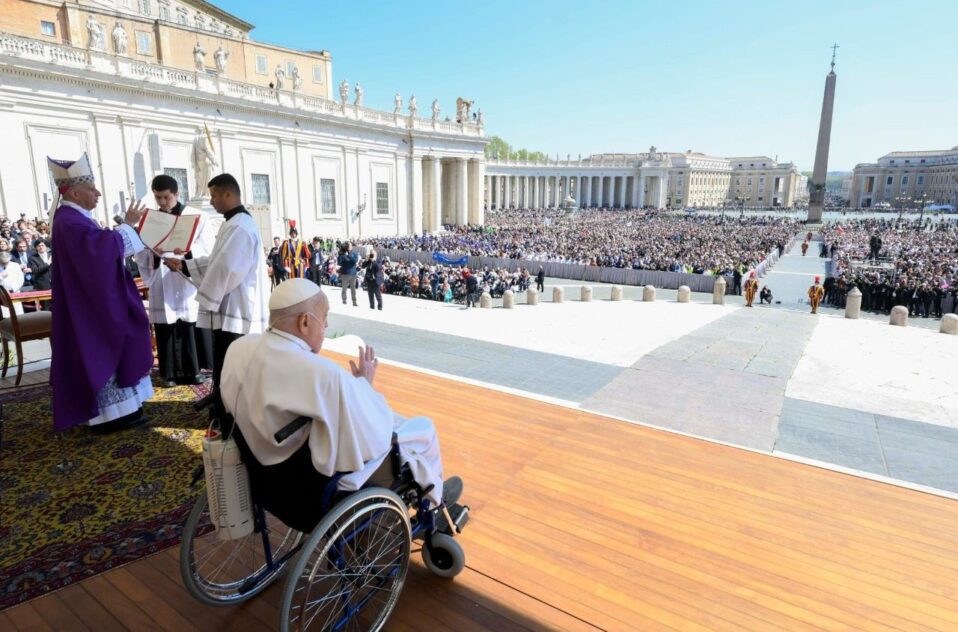
    At the end of Mass for the Jubilee of the Sick and Healthcare Workers on Sunday, the Pope appeared briefly on the stage, greeting and blessing the crowd and telling pilgrims, “Have a good Sunday, and thank you very much.”

    The Press Office conveyed that Pope Francis continues to show clinical improvements as he recovers at his residence in the Casa Santa Marta, following his hospitalization for a polymicrobial infection that resulted in bilateral pneumonia.

    The Holy Father was released from Rome’s Gemelli Hospital with “protected discharge” on Sunday, 23 March.

    Press Office confirms ongoing improvement

    Pope Francis’ condition remains stable and continues showing further slight respiratory, mobility, and voice-related improvements, which, it noted, were visible when he appeared on Sunday.

    The Holy Father has been continuing his treatment and mobility and respiratory-related physical therapy; he also requires less supplemental oxygen.

    During the day, the Pope continues with an ordinary administration of oxygen, while, at night, he utilizes high-flow oxygenation with nasal cannulas as needed.

    Pope Francis is in good spirits and continues his work activities, said the Press Office, noting he receives various documents from Dicasteries, and speaks by phone as necessary.

    On Monday, the Pope received the Vatican Secretary of State, Cardinal Pietro Parolin, at the Casa Santa Marta.

    Moreover, the Press Office added, the Pope continues concelebrating daily Mass from the small chapel on the second floor of his residence, and his calls to the Holy Family parish in Gaza continue.

    Too early to know Pope’s participation in Holy Week

    The General Audience originally planned for 9 April will not take place, but the text the Pope has prepared for the occasion is expected to be released to journalists as it has been in prior weeks.

    The Press Office noted it is still too early to discuss the Pope’s participation in Holy Week liturgies.

    The next briefing on the Holy Father will be on Friday, 11 April.

donate-online